Archives

Showing posts with label Intel. Show all posts

Tuesday, June 21, 2011

Intel: Ultrabook is not a sign that he has failed to tablets

Proposal for a new class of portable computer, the Ultrabook Intel, is not an admission that he is losing the battle to its microprocessors in tablets, according to a business executive.

"We are fine." Today, there are many tablets which have no Intel inside. "But we put much effort to cash," said Mooly Eden, vice President and General Manager of Intel's PC Client Group.

Intel announced the series Ultrabook Tuesday at the Computex Taipei show. The devices are designed to combine the fastest processing speeds of PCs with thin and light Tablet design.

Ultrabooks will be less 20 mm (0.8 inches) in thickness and Intel is working with manufacturers to obtain a first wave of out devices by the end of the year at price holiday shopping less than US$ 1 000, the company said Tuesday. ASUS said Tuesday that a nicknamed Ultrabook the UX21 will emerge at the end of the year.

Subsequent ultrabooks will depend on upcoming processors name code Ivy Bridge, which will be published next year, Haswell, which will be published in 2013. Although the first due out ultrabooks on the market do not appear to offer very different specifications of current notebooks, low consumption of bullets Haswell will even thinner design and longer battery life, Intel said.

Intel has high hopes for Ultrabooks: it is expected at the end of next year, they will represent 40% of the sales of portable consumer.

But the company also seeks to attract a greater share of the Tablet market. Most of these devices currently uses chips designed by rival to Intel, ARM Holdings, because the arm's designs are considered more effective power. Unlike Intel, arm does not chips itself, but its processor based models to other manufacturers for incorporation in their own products of the licences.

ARM could also a threat to the activities of Intel based PC market. On Monday, arm predicts more than half of all tablets, mini-notebooks and other mobile PCs sold in 2015 will use processors of the company.

In an interview with the press, Eden pointed out that Intel was not admitting failure in the market of the Tablet by introducing the Ultrabook and noted the efforts of the company to develop its own microprocessors designed for devices such as tablets, low-power. In April, Intel has announced its new processor Atom, called Oak Trail, who expects Intel will be used in 35 drawings compressed.

"We always take our competition seriously," Eden said, adding that he believed that Intel will win in the end because it suggested more processors. "Arm technology will attempt to climb in the space of the portable computer." We will try to go in their space. "Let the a better victory".

The Ultrabook Intel announcement also does not want that company moves his attention of netbooks, according to Erik Reid, Director General of the division of the mobile platform from Intel.

"We absolutely believe in the netbook category," he said, adding that Intel will announce innovations for Wednesday at the Computex Netbooks. Intel also wants to bring the price of netbooks up to $199, Reid said.

Read More >>

Shrugs from Intel to the potential Mess PC tablets, notebook Sales

IntelIntelintel would happily chips for Apple and other rivals, its Chief Financial Officer, said Thursday, but suggested that the company does not believe the Apple iPad and similar tablets would any tooth in the sales of portable and, consequently, company Intel core processor.

Instead of this, the tablets are an "incremental device" with limited applications that appeal to consumers, not mass market or business high-end, said Stacy Smith.

The chip manufacturer sees sales of laptops leaping before and with them, commands for processors to full power.

According to Reuters, Smith said Intel would gladly use its manufacturing could combine its exclusive architecture with the technology to other companies and might even consider to core-Intel for some customers.

"If Apple or Sony's came to us and said" I want to make a product that involves your core IA (Intel architecture) and a part of my IP around it ", I wouldn't blink." It would be great business for us, "says.

"Then you get into the soil of medium of"I do not want it's core IA, I want to make it my own heart custom-designed", and... it would be a discussion and much more in-depth analysis," Smith said.

He spoke to journalists at an Investor Conference in London with Christian Morales Chief of operations of Intel in Europe, Middle East and Africa.

"The data is data", said moral. "[Highest sales] volumes are laptops, and netbooks, and other devices.".

Netbooks have climbed to come in 2008-2010 because the economy was bad and they were cheap, said Smith. Now that the economy begins to recover, netbook sales have stagnated because consumers and businesses want computers real.

Even Apple sells a MacBook to a clip faster than iPads, said Smith. The iPad runs on a Samsung processor, while Apple uses processors Intel Core2 for MacBook.

In the worst scenarios, the tablets before travel netbooks toward the end of this year and could steal a third of the company netbook in 2013, he predicted.

Read More >>

Sunday, June 19, 2011

Acer to launch Tablet running MeeGo of Intel

Acer will launch a tablet of 10 inches by the end of this year with Intel's Atom processor and its mobile operating system MeeGo.

The Tablet has shown at an event of Intel at Computex Taipei show Wednesday. The device is part of Iconia of Acer "Series M." Acer has yet to determine the price, but the device will launch in the world, according to company vice President David Lee.

New Acer Tablet is a sign of Intel efforts to grow its presence in mobile devices such as tablets, a hot market company of the American chip was late to enter.

Most of the tablets use microprocessors developed by rival Intel ARM Holdings because its chips are considered more effective than Intel's power. At the same time, the popular operating systems running on the shelves are Google Android and Apple iOS.

Intel is working to get its own chips used in tablets by developing its line of processor Atom. In April, the company announced its latest Atom processor, Oak Trail, claiming that the chip will provide longer battery life. Already 35 tablets are made with the new chip, according to Intel.

Intel says new Acer Tablet will use an Atom processor, but did not specify if it was Oak Trail. The company is also working to develop more advanced Atom processors to provide savings even more power.

New Acer Tablet is also a sign that Intel MeeGo, operating system is not dead, despite the Treaty blow earlier this year when Intel Nokia partner dropped Meego and its own Symbian for the Microsoft Windows phone OS for its future smartphones.

MeeGo was also appearing in the other devices at Computex, including Asus, Lenovo and Samsung netbooks.

Intel expects more than netbooks and tablets will launch using the MeeGo operating system, according to Doug Fisher, General Manager of Intel system software division.

Read More >>

First tablets with a processor of Intel Oak Trail ship

The first tablets based on a processor of Intel code name Oak Trail began last weekend, with targeted initial models shipping companies.

Tablets Q550 by Fujitsu and CL900 Motion Computing have an Intel Z670 processor and Microsoft Windows 7 operating system. The tablets have screens 10.1 inch and provide eight hours of battery life.

Working prototypes of Oak Trail tablets made an appearance in January at the Consumer Electronics Show in Las Vegas, and the chip was officially announced in April. Companies with Acer and Toshiba showed tablets with the chip at the Computex Taipei show last week.

Z670 single core processor operates at a speed of 1.5 GHz clock and has features on-chip as accelerators of decoding 1080p video. In addition to Windows, the chip is compatible with 3.0 Google Android and Intel's MeeGo operating system.

The tablets have specific security features that might make it attractive for companies. Fujitsu Tablet has a fingerprint reader, while the Motion Computing device is bundling software of Computrace complete of absolute software, which helps track lost tablets. Two tablets include TPM (Trusted Platform Management 1.2), a cryptography based on hardware and authentication technology to enhance security.

Oak Trail tablets complete with iPad of Apple finding a growing interest in the company. However, analysts have said that the iPad is oriented more to consumers, while Oak Trail tablets will melt it infrastructures with compatibility for existing applications for Windows or Linux.

The tablets have SSD storage and machinery to USB and HDMI (interface high-definition multimedia). Also, they were back and oriented towards the front of the cameras, Wi - Fi capabilities and come with 3 G optional communication capabilities.

Fujitsu's Q550 weighs approximately 1.7 pounds (0.4 kg). It is a price from US$ 729 and ships around the world. CL900 Motion Computing weighs 2.1 pounds, is priced from $899, and ships in U.S., Australia, New Zealand, Belgium, France and Germany.

Read More >>

Intel: Multiple OS characteristic Atom ahead on arm

Intel say vendors are beginning to use Atom processors to the tablets of power not only because the chip can run Windows 7, but also because they allow devices run multiple OSes, providing an advantage over rival ARM Holdings.

At the Computex Taipei show, Intel was off tablets running one of its latest Atom processors, Oak Trail. The tablets are able to run Windows 7, Android and MeeGo mobile OS of Intel. Several tablets at the show were installed with several OSes.

ViewSonic has unveiled a Tablet called the ViewPad 10Pro, which can run Android and Windows 7 simultaneously, with the authorized user to switch between them with a click on an icon. A Tablet by the Australian company evolve III incorporates Windows 7, Android and MeeGo, which allows users to choose an OS when the device starts.

"Because the Intel architecture runs in each of these environments, we are now see innovation in all these environments run on a single device," said Doug Fisher, Intel CEO ' system software division.

Officials detailed Intel tablet of the business and strategy of the portable computer at Computex Wednesday. Intel is working to develop capable of performing on the shelves, low-power chips. Intel said that 35 tablets using the new Oak Trail tablet will be available in May.

Currently, most of the tablets on the market use arm chips because processors are considered more effective power. But Windows 7 does not run on arm chip.

One of the main objectives of the processor Atom of Intel Oak Trail was to run Windows 7 on a shelf, said Doug Davis, Director General of the business netbook and Tablet group. Many users, such as education or finance, wants to see applications Windows 7 tablets, he said in an interview with the press. "This is where we see a lot of interest for our product", he added.

But Davis also said sellers take notice of how Intel's Atom processor can run multiple OSes on a single device, a feature that intel believes will only their tablets more attractive to users.

Fisher said Intel working on virtualization technologies to make switching between multiple os on a Tablet more transparent and more practical. "You'll see an evolution and innovation around how you run multiple operating environments," he added.

Then the chip ARM cannot run the current version of Windows, Microsoft intends to change that with the next version of the operating system. Intel and Microsoft, however, recently provided views opposing on the capabilities of the new platform. Intel has stated that the next version of Windows for arm will be unable to run older versions of the operating system applications. Microsoft said Intel statement is inaccurate and misleading.

Read More >>

Friday, June 17, 2011

HP G72-253NR 17.3-Inch Intel Pentium P6000 1.86GHz , 4GB RAM, 640GB HD, Webcam, Windows7 (Mfr Refurbished)

HP G72-253NR 17.3-Inch Intel Pentium P6000 1.86GHz , 4GB RAM, 640GB HD, Webcam, Windows7 (Mfr Refurbished)The HP G72-253NR Notebook PC is loaded with an Intel Pentium P6000 1.86GHz processor, 4GB DDR3 of memory, a 640GB hard drive, LightScribe SuperMulti 8X DVD±R/RW with Double Layer Support, and Windows 7 Home Premium (64-Bit) Operating System. It also sports a 17.3" HD + HP BrightView Display along with Intel HD Graphics and an HP webcam with integrated microphone. Weighing just 6 pounds, the HP G72-253NR is great for on the move. Don't miss out on this great buy!

Price: $799.99


Click here to buy from Amazon

Read More >>

Thursday, June 16, 2011

Dell Latitude D420 12.1" Laptop (Intel Core Duo 1.2Ghz, 80GB Hard Drive, 1536Mb RAM, DVD/CDRW Drive, XP Profesional)

Dell Latitude D420 12.1The Dell Latitude D420 laptop computer provides convenience and efficiency1.2GHz Core Duo processor, 80 GB hard drive, and 1.5 GB RAMIncludes external optical drive, and computer weighs only 3lbs.

Price:


Click here to buy from Amazon

Read More >>

Wednesday, June 8, 2011

Intel Labs' Collaborative Efforts Speed Technological Breakthroughs, Shape Future of Computing


Intel Announces New Research and Partnership Efforts at Annual R&D Event

NEWS HIGHLIGHTS
  • Intel Labs announced a second Intel Science and Technology Center (ISTC) to open with a focus on secure computing, hosted at the University of California, Berkeley in collaboration with several other universities.
  • More than 35 research projects from around the globe touching visual computing, security and authentication, user experience, cloud computing and more on display at annual Intel Labs research event.
  • Intel Labs to release two new open source software packages: a distributed scene graph package to increase the maximum number of participants in 3-D Web applications, such as virtual worlds, by more than 20 times, and an advanced ray tracing package to accelerate the rendering of photorealistic images on Intel-based systems by 100 percent.


MOUNTAIN VIEW, Calif., June 7, 2011 – Intel Labs opened its doors to the media, academia, partners and customers today at the 9th annual Research at Intel event, where Justin Rattner, Intel Corporation chief technology officer, unveiled more than 35 innovative research projects underway that will help transform the future of technology.

Many of these projects are the result of joint research among different divisions of Intel and its academic and industry partners. Additionally, Rattner announced the latest Intel Science Technology Center (ISTC), a new collaborative framework for security research between Intel and several leading universities.

Focused on secure computing, Intel's latest ISTC is hosted at the University of California, Berkeley, and also includes partnerships with Carnegie Mellon, Drexel, Duke and the University of Illinois at Urbana-Champaign. This center represents the next $15 million installment of Intel's recently announced 5-year, $100 million ISTC program to increase university research and accelerate innovation. As with the first ISTC for Visual Computing, the new Secure Computing center will encourage tighter collaboration between university thought leaders and Intel.

"The co-principal investigators from Intel and UC Berkeley will lead a talented team of researchers from across the country to address today's most challenging problems in computer security," said Rattner. "Forming a multidisciplinary community of Intel, faculty and graduate student researchers will lead to fundamental breakthroughs in one of the most difficult and vexing areas of computing technology."

The ISTC for secure computing will focus its research on a variety of areas over the next 5 years, including making personal computers safer from malware, securing mobile devices, both in terms of data protection for the individual, as well as making it safer to download data to devices, and use of third party applications. Another key area researchers will address is how to protect personal data once it is scattered throughout the Web. Today people share their personal data all over the Internet when signing up for a variety of services. Users exert little to no control over their personal data once they've granted access to it, and as such, the new ISTC will look into ways to give people more control and make their data more secure.

A Glimpse into the Future of Technology, Today
Demonstrations at the Research at Intel event spanned such areas as visual computing, security and authentication to user experience and cloud computing, among others, and are the result of ongoing, collaborative efforts between Intel and its industry and academic partners. For example:

  • "Unleashing the Potential of Intel® Processor Graphics" for cryptography operations demonstrates how faster and more efficiently security measures can be achieved using the 2nd Generation Intel® Core™ processor-based platforms.
  • "Authentication of the Future" shows how identify theft can be avoided when using a trusted client with advanced authentication and user presence techniques by locally establishing your identity and confirming it with Web-based services, improving both the security and user experience.
  • "Magic Mirror" provides a look at a virtual shopping experience with a realistic avatar of the shopper dressed in the latest fashions. This demo shows a 3-D avatar that tracked movements in real-time and changed body dimensions using gesture.
  • "Steerable Sound" shows spherical loudspeakers that not only give best-in-class sound reproduction, but also dynamic, steerable sound analogous to traditional acoustic musical instruments.
  • "Automatic Classroom Collaboration" shows how students can form collaborative groups automatically using Intel-based classmate PCs. Proximity detection technology finds classmate PCs near a student and helps to form a group automatically with students who are in the vicinity. With a click of a button students can form groups, start collaborating on a project, take a quiz together or compete with each other.
  • "Wireless Energy Sensing Technology" (WEST) is an easy-to-use plug-in device that uses pattern recognition to determine when different electrical loads turn on and off in the home. Using a simple application, homeowners can examine a variety of energy reports to help them better manage their energy consumption.
  • The "Many-Core Applications Research" community shows how more than 80 worldwide institutions are researching future software using Intel Lab's 48-core single-chip Cloud Computer concept chip.

Intel Software Code Releases
As part of its strategy to increase collaboration across the industry and academic sectors, Intel Labs announced it will release source code for its Distributed Scene Graph 3-D Internet technology. This code is part of an ongoing effort to augment the OpenSim open-source virtual world simulator and will enable developers to build virtual regions where people can work or play online with a cast of thousands, instead of being limited to less than a hundred today – a more than 20 times improvement. Virtual environments have applications from entertainment and education to social networking. Intel showed an example of how the technology could enable a massive multi-player "game" to train first responders for different disaster scenarios.

Also this month, Intel Labs will release as open source its state-of-the-art offline ray tracing code to researchers and developers. Ray tracing is a computer graphics technique that produces photo-realistic images by tracing imaginary light rays to determine where and how every part of an object should be illuminated. Intel showed how this code will improve the speed by up to 100 percent on Intel-based systems. This advanced ray tracing code targets professional applications and is a separate effort from the company's game-focused, real-time ray tracing project shown previously. The code is expected to find use in commercial applications such as designing cars, making movies and visualizing new architectural designs.

Read More >>

Monday, March 28, 2011

Intel Unleashes New 320 Series SSD with Increased Capacity

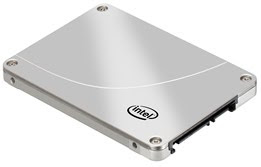
Intel 320 Series SSDIntel has just announced their newest product, the Intel SSD 320 Series, which represents a significant upgrade to Intel's existing lineup of solid-state drives. According to Intel, this series of SSD can have up to 600GB and improves performance all while having a better price than the current X25-M Series. This new SSD definitely fulfills Intel's promise of their 25-nanometer multilevel cell flash manufacturing process. This process increased production in 2010 and increased SSD capacity points while also reducing production costs by cramming 8GB of storage onto a single 167mm flash die.

For those of you who don't know, that is twice the capacity that could be produced by the previous 34nm process. Intel has done a lot of work with the 320 Series. Everything you know about the SSD has been redesigned. It now uses an all-new Intel controller and even supports 128-bit AES encryption. This series also enhances data reliability through extra arrays which amplify the error correction that is already in the flash. Then it adds a failsafe in order to enable the drive to complete writing a file even if it has been interrupted by a loss of power.

With all these new features, the new SSD should not have any problems appealing to the target audience of consumers and business users. Intel expects the 320 Series to even find a place in data center and server applications as a replacement for the 15,000 rpm hard drives. Intel has not yet released a retail pricing, however, they do expect the drives to sell in quantity for $89 (40GB), $159 (120GB), $289 (160GB) $529 (300GB) and $1,069 (600GB). If you want a comparison, the Crucial RealSSD 300 (256GB) currently sells for $475 while the Intel X25-M (160GB) goes for about $410.

Intel has stated that they expect the 160GB SSD 320 Series to sell for "about $100" less than the X25-M. A year ago a 256GB SSD would run you around $750, so if Intel's expected volume prices can become retail prices, we may just see a new lineup that could help adapt SSD into a more mainstream item.

Source: PCWorld - Intel 320 Series SSD Boosts Capacity, Drops Cost


Find out what is going on in the Tech Army World. What are the Top 10 Money Making Missions? What other companies have joined and what do they do? How do I join the Tech Army Organization ?

Read More >>

Wednesday, February 23, 2011

Intel's Light Peak to Debut Thursday

Intel Light PeakThe technology world loves rumors, in fact, I think that they live, breath, eat and sleep rumors. I feel that if there were no internet rumors, then we would have a lot of depressed computer people out there with nothing to do to fill their free time. It's quite sad really. But, alas, we have another rumor floating around the internet that all the little techies are drooling over and that is the rumor that Intel will officially launch its Light Peak high-speed connection technology this Thursday.

This great speculation comes from Intel telling the media that it will "host a press briefing to discuss a new technology that is about to appear on the market." CNET apparently has "an industry source familiar with details of the event" and says that it will indeed be Light Peak. Other speculation surrounding this news is concerning whether or not this launch will have anything to do with the new MacBook Pros also set to be launched on Thursday.

Rumors have been circulating since late 2010 about Apple possibly incorporating Light Peak into its 2011 MacBook Pro models. Since then, there have been leaked spec sheets floating around as well as product photos of a 13-inch MacBook Pro which would back up this rumor if it is true. If this is true, then Apple plans on renaming it "Thunderbolt". However, it is unclear whether or not Intel will adopt this nomenclature as well.

Whether you decide to call it Thunderbolt or Light Peak is up to you, but know that it is a single interface designed to replace the SCSI, SATA, USB, FireWire and PCI Express ports on a computer. The technology, which is copper-based, supposedly delivers 10Gbps bi-directional data transfers and is the main reason some people have speculated Intel has been so slow to adopt native USB 3.0 support on its motherboards, something Intel has not surprisingly refuted.

Source: Maximum PC - Intel to Debut Light Peak on Thursday, Apple Calls it "Thunderbolt"

The Security Camera Blog


Get a regular infusion of new security camera technology information, video and news. Easy to subscribe in a reader or by email.


We help you stay in touch with the latest security camera features.

Read More >>

Tuesday, February 22, 2011

New Fab 42 from Intel

On Friday, February 18, Intel announced that they will be constructing a brand new $5 billion fab in Arizona. The fab will be used for the manufacturing of chips using a 14-nm manufacturing process and leading edge 300-mm wafers.

In the statement that Intel released on Friday, it was said that the new fab would be called Fab 42. Construction of the facility will begin sometime in the middle of 2011. Intel is saying that Fab 42 will be "the most advanced, high-volume manufacturing facility in the world." It should be finished in 2013.

The announcement about Intel’s latest investment was made on the same day that President Obama toured an Intel facility in Hillsboro, Oregon. While at the facility, Obama decided to go ahead and name Intel’s chief executive Paul Otellini as a member of the Council on Jobs and Competitiveness. Going along with this, it is definitely not coincidental that the new fab that Intel is constructing will create "thousands of construction and permanent manufacturing jobs" that go right along with Otellini’s new position.

One of the biggest advantages that Intel has had in the past has been its strong manufacturing line. They have constructed several different fabs around the world. These fabs have really helped to keep Intel in competition with their rival AMD, who has been trying to undermine Intel by designing more efficient chips.

The new 14-nm fab that is being constructed by Intel will be considered one of the most advanced semiconductor fabs compared to any in its category. According to PCmag, the fabs will be “putting out chips that will incorporate linewidths that are twice as fine as Intel's current ‘Sandy Bridge’ processors, which use a 32-nm process.” As of right now, a comparison cannot be made between the chips that Intel is putting out currently and those that will be made with the new process, but we can say that the new chips will most likely use less power or run much faster than the versions that Intel is currently releasing.

"The investment positions our manufacturing network for future growth," said Brian Krzanich, senior vice president and general manager for Intel's manufacturing and supply chain operations, in a statement. "This fab will begin operations on a process that will allow us to create transistors with a minimum feature size of 14 nanometers. For Intel, manufacturing serves as the underpinning for our business and allows us to provide customers and consumers with leading-edge products in high volume. The unmatched scope and scale of our investments in manufacturing help Intel maintain industry leadership and drives innovation."

In the past few weeks, Intel has been dealing with a small roadblock that the company discovered concerning a support chip that is associated with the Sandy Bridge chip processor.

At the end of January, Intel found what is now being called the “Cougar Point” flaw and were forced to recall the chip. Shipping resumed about a week after the problem was discovered, but it was under the condition that Intel and OED could both assure one hundred percent that the flaw would not manifest.

Due to the temporary roadblock that Intel was forced to deal with, its rival AMD went ahead and launched an ad campaign on Friday in an attempt to pull in customers. We’ll have to see if Intel can jump right back into the race.

Put your eye on the problem with Camera Security Now, installing security cameras since 1999. We install in the US and we can help you do it yourself.


Call us toll free 877-422-1907 between 8am EST and 5pm PST M-F. Talk to an expert about your serious security camera needs.

Read More >>

Wednesday, February 2, 2011

Intel Design Flaw Affects HP Availability

The tech world has been buzzing over Intel's second generation of processors known as "Sandy Bridge", but now they might be buzzing in a slightly different way as a major design flaw is stirring things up with not only Intel but other technology companies that have invested in devices using the processors.

HP has stated that the availability of some of their devices will be "impacted" by the design flaw in the chips that was recently disclosed by Intel. This flaw will also delay a product presentation by HP that is scheduled to take place in San Francisco next week.

According to a statement by Edelman Public Relations Worldwide, "We are postponing the business notebooks briefing on February 10 as the availability of HP products will be impacted by the flaw outlined by Intel." Intel said in a statement on January 31 that it will incur $1 billion in missed sales and higher costs to fix this design flaw. This flaw is also affecting PC makers like Samsung, who said they will offer refunds on some PCs, and NEC, who said they may push back the release of four new models.

The flaw is in a support chip, or chipset, for Intel's latest Sandy Bridge processors which were designed to improve PC graphics and repel a challenge by Advanced Micro Devices Inc. HP sells many computers that use chips other than the Sandy Bridge ones from Intel. According to Marlene Somsak, spokeswoman for HP, "HP has the broadest lineup of PCs in the industry and there are many HP choices using a wide variety of processors."

Dave Frink, spokesman for Dell, stated in an e-mail that "the Intel flaw affects four Dell products sold under its XPS, Vostro and Alienware brands." Frink went on to say, "We're committed to addressing this with customers who have already purchased one of the four products, will work directly with them and provide further details as they become available."

Devices that could potentially have the faulty chips have been sold since January 9 and Intel said it has corrected the flaw and has already begun manufacturing a new version of the chip to resolve the issue.

Intel plans on delivering an updated version of the Sandy Bridge processors, known as Cougar Point, to customers in late February with full production happening in April. Eight million Cougar Point chips have already been shipped out by Intel that will have to be replaced.

Source: Business Week
File Server rentals are ideal if your company needs an extra storage unit for company information while you are testing various types of storage solutions.

Whether you need a short-term rental or a long-term lease, we have the right kind of server for your needs.
Read More >>

Monday, January 3, 2011

Intel's Second Generation of Core Processors

Second Generation Core ProcessorsThe second generation core processor family, otherwise known as the Intel Core 2011 processors, has finally arrived. There have been months of teasing accompanying on-stage demos, but the details on the Core i3, i5 and i7 processors are finally coming out and, considering the fact that there are a total of 29 new CPUs as well as a new integrated graphics options (processor graphics), there is a lot to mull over.

The first generation of processors was released a little over a year ago, so what is it that makes the second generation different? Well, if you haven't been following the Sandy Bridge news, the new family of processors are all based on the 32nm microarchitecture from Intel. They are also the first to put processor, memory controller and graphics on the same die.

But what does that mean for you? Well, it means the package is smaller and the parts take advantage of each other more efficiently. While the graphics may not be as good as a discrete video card, they are a lot more powerful than before. According to Intel, the HD 2000 and 3000 processor graphics provide double the performance of Capella-based systems which coincides with early benchmark tests. Turbo Boost and Hyper-threading technologies have also been improved by Intel to a point at which the new chips enable higher levels of CPU performance. The new integrated chips reduce power consumption and can even turn off an idle optic drive activating "incredible battery life" according to Intel.

The new architecture means new CPUs, 29 to be exact, which include different versions of mobile and desktop Core i3, i5 and i7 models. Naming on the processors has changed. Now the processor's name is followed by four numbers as opposed to the previous three. The first processors to ship in physical systems will be the quad-core i7 CPUs and should be hitting this week with the dual-core versions coming in February. Ultra-low voltage versions for portable laptops are coming and should be introduced in the second half of the year. Be sure to keep an eye out for some specially marked overclockable "K" series processors that will allow you to individually set the clockspeed ratios for each individual core.

This new generation of processors is sure to create quite the buzz in the computer world, especially for people who are enthusiasts or are looking to build a custom rig. There are a lot more details out about the processors now than there have been, but I can only imagine what will be revealed about them later. Keep checking back here periodically for all the details on the second generation Intel processors.

Source: Engadget

Computers, Desktops, Laptops, Servers and the latest in Portable Tablet PCs are available from your computer rental company, Rentacomputer.com.

Talk to a Rentacomputer.com Tech Travel Agent Today!
Call Toll free 800-736-8772.
Read More >>

Monday, May 31, 2010

Intel Launches Core i3/i5/i7 Chips for Ultra-Portable Laptops

Intel Core i3/i5/i7 ProcessorsDespite promises of a laptop with an all-day battery life coupled with an inexpensive price, Intel's ultra-low voltage processors, otherwise known as CULVs (Consumer Ultra Low Voltage), haven't exactly been living up to the hype. Part of the reason is that Intel hasn't updated their mobile line of processors with its new Core technology, instead their CULV line has simply been based on Core 2 Duo technology. That is until now.

The chipmaking giant Intel has released their new ulta-low voltage versions of its 32-nm “Nehalem” Core i3, Core i5, and Core i7 processors. This means that Intel’s premiere mainstream processors have been slightly downsized so they can now be installed inside power-sensitive ultra-portable notebook computers. These new chips not only pack a significant performance punch, which Intel says is about 30% faster than their previous ultra-low-voltage offerings, but also use 15 percent less power in the process. The new chips will be identified from their larger counterparts by their part numbers which will end with the letters "um" (i.e. Intel Core i5-430um or Intel Core i7-640um).

“Consumers crave laptops that offer style and performance, and the new 2010 Intel Core Ultra-Low Voltage processors for ultra-thin laptops delivers both, in one sleek design,” said Intel PC Client Group VP and general manager Mooly Eden, in a statement. “Not only are laptops becoming ultra-portable, but with the new processors inside, users will see faster response times and less waiting.”

Like their bigger brethren, ULV versions of the Intel Core chips will feature Turbo Boost and Hyper-Threading technologies enabling the processors to dynamically overclock themselves and devote resources to a single processor core. In addition, the new processors will have a thermal envelope of 17W, which is at least twice as energy efficient as their standard volt Core processors. However, Intel will not be converting its ultra-thin processor offerings completely over to the Core line. ULV versions of the Celeron and Pentium processors will continue to be available to manufacturers and will still be a mainstay among many laptops in the future.

It seems the direction that Intel wants to take its new chips is towards a strange middle ground between very affordable and highly portable, yet slower-performing netbooks and even full-size traditional laptops. The MacBook Air is an example of an ultra-thin laptop that offers powerful portability but is simply too expensive for the average consumer. On the other hand, there is the Toshiba T135 series of ultra-portable laptops which seem to attract far more interest than the Macbook Air for its more reasonable price tag despite being less powerful.

Then there are ultra-thin laptops which tout enhanced performance, such as dual-core Atoms, which offer negligible performance improvements for their cost. It appears that consumers are more interested in average and smaller sized laptops which deliver on affordability. Intel promises that systems will start appearing in June equipped with their new ULV processors, so we'll see soon enough just how they stack up. Already Intel says more than 40 designs based on the chips have been confirmed and are already in the works from makers such as Acer, Lenovo, Asus, and MSI.

Looking for Computer / PC Rental information? Visit the www.rentacomputer.com PC Rental page for your short term business PC needs. Or see this link for a complete line of Personal Computer Rentals.
Read More >>

Wednesday, May 19, 2010

Gateway Upgrades Their ZX Series

gateway zx seriesOn Wednesday, Gateway updated their ZX series that includes mid-ranged and high-end all-in-one desktop computers.

Now Gateway is offering their ZX4300 line with the option of AMD’s Athlon II X2 processor, and their ZX6900 with either Intel’s Core i3 or Core i5 processor. The ZX6900, which is one of Gateway’s high-end PCs, can also be equipped with a Blu-ray reading drive. Both of the series also offer touch-screen technology that works perfectly with the included Windows 7 Home Premium operating system.

The Gateway One ZX6900-01e now comes standard with an Intel Core i3-530 processor, 4GB of DDR3 memory, a 640GB hard drive, slot-loading Blu-ray player/DVD burner, integrated Intel GMA graphics, 802.11b/g/n Wi-Fi, and 23-inch widescreen touch panel that features 1,920 x 1,080 resolution. Also included are HDMI and eSATA ports that allow for more connectivity options. This PC is available from Gateway for $1,019.99.

The Gateway One ZX4300-01e is more of a mid-ranged desktop compared to the ZX6900. It features an AMD Athlon II X2 235e processor, 4GB of DDR3 memory, a 640GB SATA hard drive, DVD burner, integrated ATI Radeon HD 4270 graphics, 802.11b/g/n Wi-Fi, and 20-inch touch panel widescreen monitor with 1,600 x 900 resolution. This model is available through Gateway for $749.99.

Both of these desktops from Gateway include webcams and a variety of free software. They are both excellent PCs. The upgrades from Gateway are certainly a welcome change.

Looking for Computer / PC Rental information? Visit the www.rentacomputer.com PC Rental page for your short term business PC needs. Or see this link for a complete line of Personal Computer Rentals.
Read More >>

Monday, May 17, 2010

The Apple iMac 27-inch (Core i7)

apple imac 27-inchDesktop computers have been forced to change their faces in order to not be considered obsolete. They are constantly being outdone by the convenience and speed of laptops, notebooks, and netbooks. The Apple iMac 27-inch (Core i7) is a fantastic example of an multimedia, all-in-one desktop computer. In many ways, it resembles its predecessor, the Apple iMac that featured a Core 2 Duo processor, except this iMac 27-inch (Core i7) is much faster.

The Apple iMac 27-inch (Core i7) is designed very much like the rest of the iMac line from Apple. It features brushed aluminum which surrounds a black glass frame. Also included is a sturdy metal arm, that tilts in a variety of different directions and angles, that suspends the screen over your desk for a sophisticated look. The back of the iMac is described as “clean.” Helping this “clean” look is the fact that the iMac 27-inch (Core i7) comes standard with a wireless keyboard and mouse. The MagicMouse that is included with this desktop has a multi-touch surface that allows for clicking and swiping. The back panel of the computer has audio in/out jacks, four USB 2.0 ports, a FireWire 800 port, the Mini Display Port (in/out), and a Gigabit Ethernet port.

The iMac 27-inch (Core i7) features a vibrantly lit screen with 2,560 x 1,440 resolution. This allows for easy spreadsheet editing and presentation of projects. You can also simply plug in an external monitor to give you more screen space. This can be done by utilizing the Mini DisplayPort to hook up another monitor or device.

On the side of the iMac there is a slot-loading DVD player/burner. Unfortunately for some reason, Apple does not allow for the option of Blu-ray. This was one of the very few disappointments to be found with the iMac 27-inch (Core i7).

Included with your iMac is the iLife suite that is comprised of iPhoto, iMovie, GarageBand, and iTunes. These are some great programs that allow for immense creativity. The system comes standard with 4GB of DDR3 memory and can hold up to 16GB. To replace the hard drive it is necessary to take apart the iMac, so external expansion is the best way to go.

The iMac 27-inch (Core i7) runs on an Intel Core i7-860 processor with 2.8GHz that can be boosted up to 3.46GHz when it is necessary to provide more computing power. The Core i7 processor also supports HyperThreading which allows you to compute eight streams of data at once. This is a great computer for multimedia purposes. This iMac is also great for gaming. It features ATI Radeon HD 4850 graphics that allows for smooth gameplay.

The Apple iMac 27-inch (Core i7) is an extremely powerful multimedia desktop computer. It is fast, sleek, up-to-date, and feature-filled. The only possible drawback for most people would be the price tag. It is listed at $2,199 direct from Apple. That may seem like a lot to put out for a desktop computer, but for those that have the cash for such a purchase, they will be getting everything they could ever want from the iMac.
Looking for Computer / PC Rental information? Visit the www.rentacomputer.com PC Rental page for your short term business PC needs. Or see this link for a complete line of Personal Computer Rentals.
Read More >>

Friday, April 23, 2010

Intel Profits Up this Quarter

Intel Profits Up this Quarter

In this day and time, we're so used to seeing companies talk about how much money they aren't making and employees they aren't hiring, but for Intel, that doesn't appear to be the case. The world's largest computer chip maker announced last week that it has nearly quadrupled its quarterly net profit and has intentions to hire between 1,000 and 2,000 new employees in 2,010.

In a conference call with analysts, Intel Chief Executive Paul Otellini said, "The industry has nearly fully recovered." He also accredits the increase in revenue to a higher demand for PC products and the fact that "the average fleet of notebooks is four years old, the average fleet of desktops is five years old." According to Otellini, "it makes business sense" to get new inventory now.

The comapany's profit for the first quarter (which ended on March 27) was about 2.4 billion dollars, up from this time, last year's 647 million dollars. Revenue rose 44% to 10.3 billion dollars. Wall Street had predicted 9.8 billion dollars, while the company itself had predicted 9.3 billion dollars.

Otellini also said in a statement, "looking forward, we're optimistic about our business as Intel products are designed into a variety of new and exciting segments."

The company has predicted 9.8 to 10.6 billion dollars for the second quarter, while Wall Street analysts have precited 9.69 billion.

Intel has already hired 100 employees this year. The company is based is Santa Monica and employs nearly 80,000 people (about 3,000 less than last year.


Looking for Computer / PC Rental information? Visit the www.rentacomputer.com PC Rental page for your short term business PC needs. Or see this link for a complete line of Personal Computer Rentals.

Read More >>

Monday, December 21, 2009

Intel Introduces Newest Processors

Pine Trail Atom ProcessorBe prepared for a new generation of netbooks and desktops because Intel has just officially announced its newest line of processors. Intel has a new processor for netbooks as well as 2 new processors for desktop PCs. The Pine Trail Atom N450 will be put into next generation netbooks along with a new low-power Intel NM10 Express Chipset. New Desktops will be integrated with the Pine Trail Atom D410 or the dual core D510 which also comes paired with the NM10 chipset.

Intel's Atom processor was designed entirely with small devices and low power in mind. Since it was made on Intel's 45nm high-k metal gate manufacturing process, size has always been small. However, the overall package just got smaller thanks to increased integration and 45nm manufacturing. This means that designs will be even smaller and more compact which means lower costs for OEMs as well as an improvement to performance.

The 1.66GHz chips integrate the memory controller and Intel graphics directly onto the CPU die which isn't too surprising. Atom processors have a done wonders with the netbook market since Intel announced the first Atom processors for netbooks and entry-level PCs back in June of 2008. Intel has well over 80 design wins for the new Atom platform from from leading OEMs like Lenovo, MSI, Fujitsu, ASUS, Toshiba, Dell, Samsung and Acer. Most of these systems will come with either Windows 7 Starter or Home Basic OS though some consumers will have other options like Moblin TM Linux v2 for more customization.

Intel hopes to have at least 80 machines with the 45nm chips at CES 2010. Each one of the chipsets should use about 20% less power than its predecessor. The ASUS Eee PC 1005 PC, which was N450-based, got 10 hours of battery life in regular use. However, there was no performance improvements over the N270 or N280 that were noticeable. However, no official word can be laid down just yet until we can see a few more machines.

Read the latest on:
x86 Server Market Directs Microsoft to End Itanium Development


Looking for Computer / PC Desktop Rental information? Visit the www.rentrpc.com Desktop PC Rental page for your short term business PC rental needs. Or call 800-736-8772 today!
Read More >>